

Events: Appointments and Reservations Overview
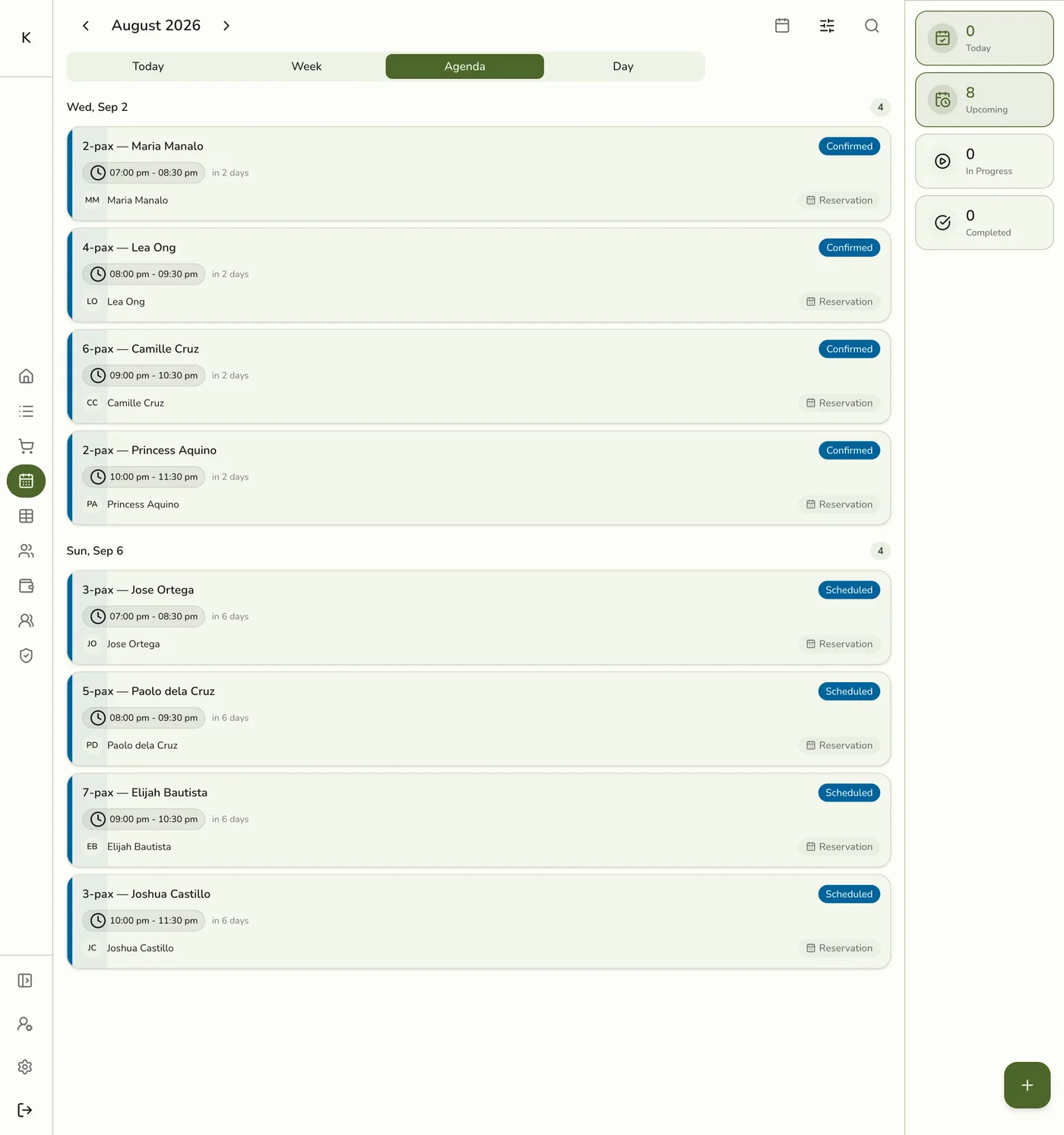
In Fuze Store, every scheduled booking is an Event. There are two types: Appointments and Reservations. Open them from Sell → Events (calendar / schedule board).
Not on the free plan
Events are unavailable on the free Basic plan. Upgrade to Starter or higher (or use an active free trial) to schedule appointments and reservations. Existing bookings stay in history if you later downgrade — you just cannot create or manage new ones until Events is available again.
Appointments vs Reservations
| Appointment | Reservation | |
|---|---|---|
| What it is | Service-based booking | Party / space booking |
| Required | Bookable service | Party size (≥ 1) and at least one customer |
| Optional | Staff, customer contact details | Unit (table/room), deposit amount |
| Title | Server builds it from service + customer (you do not type a free title) | Server builds it as {n}-pax — {customer} |
| Typical flow | Check in → In progress → Complete | Seat → In progress → Complete |
Events are not orders. Creating an event does not create a sale. Link the booking to an order at POS checkout when the customer is ready to pay.
How to open Events
- Open the drawer → Sell.
- Go to Events (schedule board / calendar).
- Tap New Event to create an Appointment or Reservation.
Field reference
Appointment
| Field | Required | Notes |
|---|---|---|
| Service | Yes | Bookable event service |
| Staff | No | Assigned provider, or any available |
| Date / time slot | Yes | Slots respect service duration and staff availability |
| Customer | Yes (name) | Phone / email optional |
| Color / special requests | No | Calendar color and notes |
Reservation
| Field | Required | Notes |
|---|---|---|
| Date / from–to | Yes | Time window for the party |
| Party size | Yes | At least 1 |
| Customer(s) | Yes | At least one guest |
| Unit | No | Table, room, or other unit |
| Deposit | No | Optional prepayment amount |
| Color / notes | No | Display and internal notes |
Statuses
Bookings move through statuses such as New, Confirmed, Scheduled, Rescheduled, Checked In, Seated, In Progress, Completed, No Show, Canceled, and Closed.
- Check in applies to appointments.
- Seat applies to reservations.
- The app only offers valid next steps for that type — you cannot seat an appointment or check in a reservation.
Booking policies
In store preferences you can set:
- Lead time — minimum advance notice before a booking.
- Maximum advance — how far into the future bookings are allowed.
- Cancellation window and fee — late cancels may require staff to acknowledge a fee (recorded on the event history; money movement for the fee is handled separately from the cancel action).
Attached items
A bookable service can list attached catalog items (products or services). When you check in the appointment at POS, required attached items can auto-add to the linked order. Manual lines for the same product are not doubled.